Holiday and Celebration Words for Kids
Holiday and celebration vocabulary names special days, people, food, objects, feelings, and shared actions. Holiday and Celebration Words: Vocabulary and Activities for Kids gives children language for birthdays, family events, festivals, and meaningful occasions. Traditions differ across homes and cultures, so begin with celebrations your child knows. Then add words from classmates, books, and films. The goal is to describe events, participants, and feelings—not memorise every festival name.
📥 Holiday and Celebration Word Practice
Learn useful words, complete the activities, and track your practice during the week.
Leave your email — we'll send the PDF to your inbox.No spam — the PDF plus one short reminder. Unsubscribe anytime.
Core Words and Phrases
Start with words that fit several occasions. A child who knows guest, gift, decorate, and celebrate can discuss a birthday, wedding, festival, or New Year gathering. Add specific names when they matter to your family.
Treat Holiday and Celebration Words: Vocabulary and Activities for Kids as a flexible vocabulary set, not a fixed list. Younger children may learn eight familiar nouns first. Older children can sort the language by meaning and use it in longer descriptions.
Teach phrases beside single words: send an invitation, wrap a gift, light a candle, wear a costume, and share a meal. These word partnerships build natural sentences without word-by-word translation.
Using the Words in Context
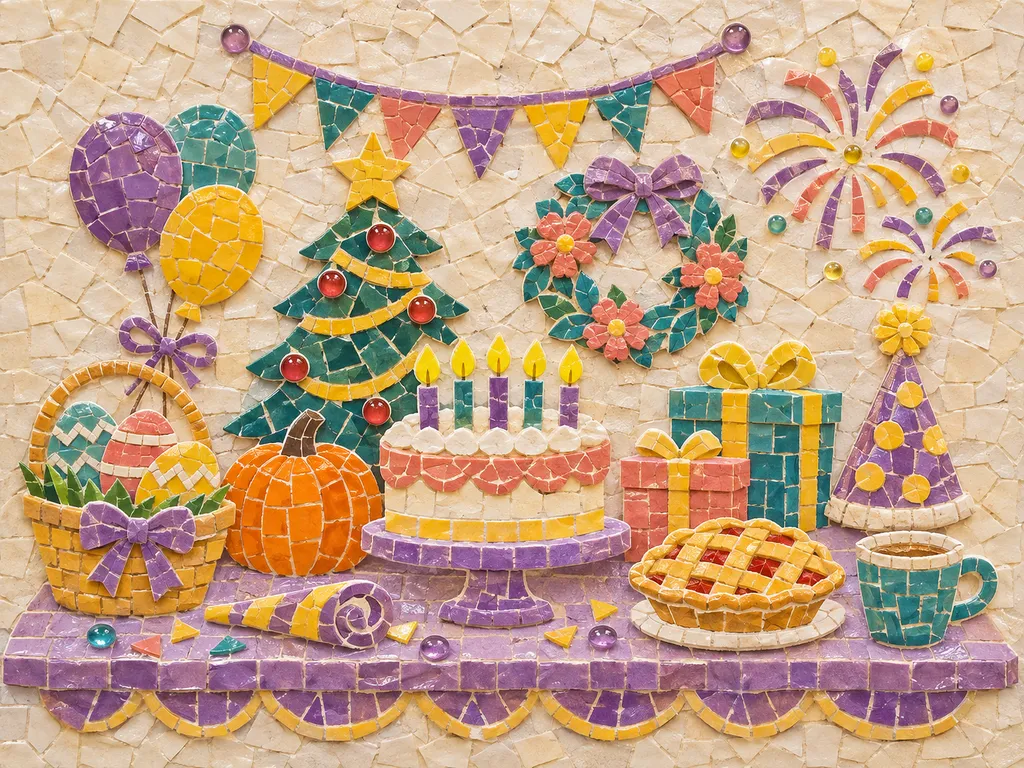
Sentence work in Holiday and Celebration Words: Vocabulary and Activities for Kids should progress from naming to describing. Begin with “This is a card” and “They are guests.” Then add actions: “We send a card,” “The guests arrive,” or “Our family shares a meal.”
Sentence frames support early speakers: “We celebrate ___,” “I can see ___,” “People wear ___,” and “My favourite part is ___.” Examples include: “We celebrate New Year with music” and “My favourite part is visiting my grandparents.” Accept a short answer before requesting details.
Older children can compare customs without judgement: “In our home, we open gifts in the morning, but another family may do this later.” They can explain order with first, then, and finally: “First we decorate the room. Then the guests arrive. Finally, we share the cake.”
Activities for Different Ages
Holiday and Celebration Words: Vocabulary and Activities for Kids works best when tasks match the learner’s age. Vocabulary may stay similar while reading, writing, and explanation increase.
Movement and choice help children practise. Place four picture cards on a table and say, “Point to the invitation,” or ask, “Which object would you give to a guest?” Then let your child lead and give the next instruction.
Invite multilingual comparisons when relevant: “Do you use a similar greeting in another language?” Avoid turning each word into a translation test. Connect the English word directly with an object, action, or idea.
Simple Practice at Home and in Lessons
Short sessions across several days work better than one long word test. Choose six to ten words, say them aloud, play a game, and revisit them in a new setting. A shopping list, calendar, photo, or homemade invitation can prompt speech.
Across LearnLink lessons, our tutors place new words inside questions and role-play. At home, follow the pattern: hear, say, use, and recall. Ask “What do we need for the celebration?” instead of “Do you remember the words?”
Plan a Mini Celebration
Ask your child to choose an occasion and complete four prompts: “We will invite ___.” “We will decorate with ___.” “We will eat or share ___.” “Our guests may feel ___.” Younger children can answer aloud or draw. Older children can write an invitation and a three-step plan.
Common Mistakes and Clear Corrections
Children may treat holiday, festival, party, and celebration as synonyms. A holiday is a recognised special day or period; regional English may mean time away from school or work. A festival is an organised cultural, religious, or community event. A party is a social gathering. A celebration marks something.
Correct word partnerships gently. English speakers usually say have a party, give a gift, make a wish, and celebrate a birthday. Use on with a named day or date, as in “on New Year’s Day,” and in with a month or year. Holiday names normally take capital letters.
Greetings depend on the occasion and family. Happy birthday and Happy New Year are established patterns; other greetings use different words. Teach children to ask, “Do you celebrate this day?” and listen. Knowing a celebration word does not require participation.
- Choose six holiday words and ask your child to sort them by event.
- Model each incorrect word gently, then invite one clear repetition without criticism.
- Create three picture cards showing a birthday, parade, and family feast.
- Read one celebration story and pause whenever a target word appears.
- Finish with a four-question quiz contrasting easily confused holiday and celebration words.
When a word has several meanings or pronunciations, Cambridge Dictionary is a useful check before turning it into child-friendly examples.
Frequently Asked Questions
How Many Celebration Words Should My Child Learn at One Time?
Begin with six to ten words linked to one familiar situation: birthday, card, cake, candle, gift, and guest. Add words after your child recognises and uses most of the first set. Older learners can manage larger groups but still need sentence practice.
Should My Child Learn About Holidays Our Family Does Not Celebrate?
Yes, for understanding and respect. Children meet unfamiliar celebrations in books, lessons, films, and conversations. Teach neutral words and let people describe their customs. Avoid presenting one practice as universal. Your child can say, “We do not celebrate that at home, but I know what it is.”
What If My Child Mixes Birthday, Holiday, and Festival Words?
Mixing related words shows your child is sorting their meanings. Return to Holiday and Celebration Words: Vocabulary and Activities for Kids and group the language into occasions, people, objects, actions, and feelings. Contrast two examples: “A birthday marks when someone was born. A festival is often a larger cultural or community event.” Then request one example of each.
How Can We Practise Without Worksheets?
Use objects, family photos, drawing, mime, and role-play. Your child can wrap an empty box, make an invitation, arrange pretend guests, or describe a celebration photo. Play “What is missing?” with five objects, or act out dance, invite, and decorate. Spoken games build recall and connect words with meaning.
For the next seven days, practise for five minutes at a time:
- Choose six useful words from the table.
- Use each word in one spoken sentence or game.
- At the end of the week, ask your child to describe one celebration using at least four of the words.
If your child needs steady speaking practice, start small — choose a trial lesson.
Stay updated on our latest tips and resources by following us on Instagram LearnLink.